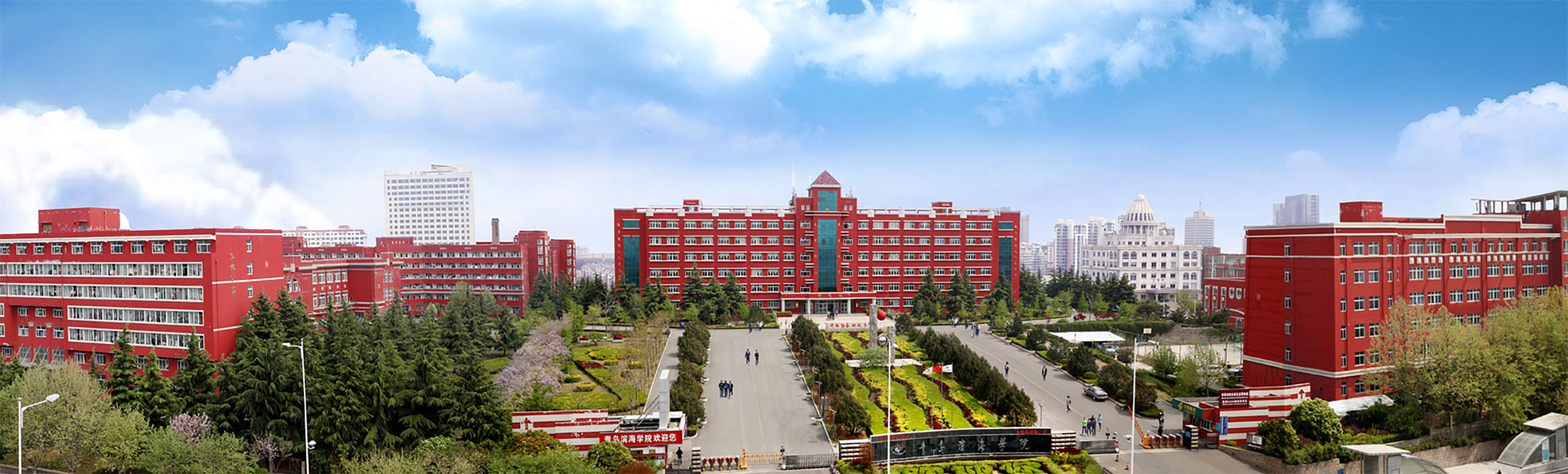
On the morning of September 11, following the opening ceremony for freshmen of Qingdao Binhai University Class of 2026, Han Fangxi, founder and president of the university, gave the first lesson of the new semester to the new students in the Xiaozhushan Auditorium. The lecture was broadcast live simultaneously on the Dazhushan Campus for all freshmen to attend.
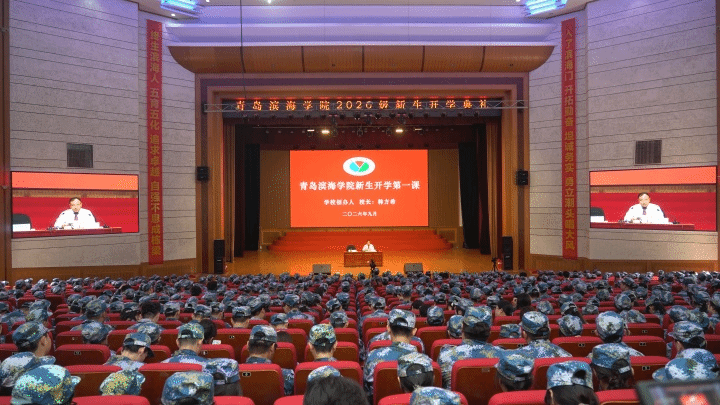
Addressing freshmen coming from all across the country, Han Fangxi first introduced Qingdao’s historical evolution, transportation infrastructure, industrial layout, talent demands of local enterprises, and the development prospects of the West Coast New Area of Qingdao. He elaborated on the industrial opportunities of the West Coast New Area as a national-level new district, pointing out that the majors the freshmen are studying promise bright local career prospects. Having been rooted in Qingdao West Coast for 34 years, the university boasts graduates highly recognized by employers. Through this introduction, freshmen gained a holistic understanding of the city where they pursue studies and the local employment landscape, further fostering their sense of belonging.
Han Fangxi then reviewed the university’s founding journey dating back to 1992. He recounted the school’s early operations amid harsh conditions and stories of the pioneering Binhai community, interpreting the Binhai Spirit: Pioneering, Diligent, Sincere and Pragmatic; Striving for Excellence and Constant Self-improvement. The retrospective of university history helped freshmen understand the origin of the university and what defines a Binhai person. Inspired by the mottos — Once you enter Binhai, you are a Binhai person for life, Everyone has talent, and everyone can achieve success, and Cultivating modern citizens of virtue, practice, benevolence and innovation — freshmen strengthened their identification with the university and their sense of responsibility as Binhai students.
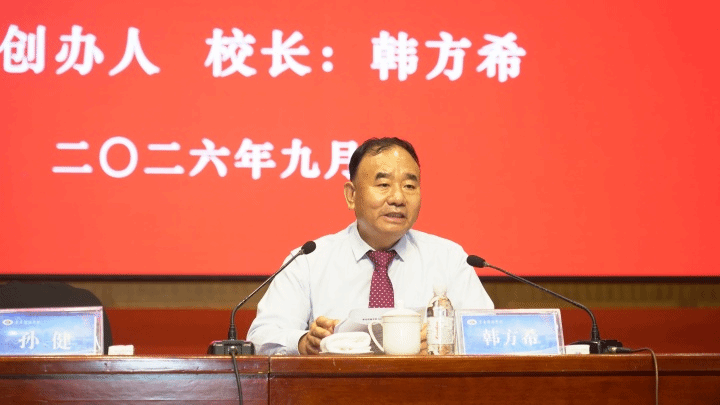
In response to concerns raised by new students, Han Fangxi drew on national policies and the university’s educational practices to discuss similarities and differences between public and private universities, the university’s educational philosophy, and common perplexities young people face in growth. He noted that private universities enjoy equal legal status and policy support as public universities, yet operate with more flexible mechanisms. Adhering to the fundamental task of fostering virtue through education, the university stresses the integration of moral conduct and practical work, guiding students to cultivate morality and good habits in daily life. Regarding hot social topics such as “devaluation of academic credentials” and consumerism, he encouraged freshmen to establish sound attitudes toward learning, consumption and personal growth, resist impetuosity and anxiety, devote energy to academic study and competence improvement, and achieve self-growth through self-discipline and hard work.
Han Fangxi closed the lecture with an encouragement for freshmen: learn to conduct themselves and handle affairs at Binhai, master professional knowledge solidly and build strong capabilities. He urged them to align personal aspirations with national development, integrate youthful endeavors into the tide of the times, and realize life values through serving society and contributing to the country.
Rooted in the requirements of the times and the university’s mission, the lecture integrated education on municipal and university conditions, value guidance and youth development. It charted a clear path of growth for the Class of 2026, embodying the founder’s profound devotion to education and earnest expectations for the new students.
Tailored to freshmen’s needs upon enrollment, having senior university leaders deliver the first lesson of the semester is not only a key component of freshman orientation education at Qingdao Binhai University and a long-standing tradition, but also a vivid practice for the university to fulfill the fundamental task of fostering virtue through education and help young students fasten the “first button” of college life.
The 70-minute lecture concluded with prolonged applause.
(Text/Photos: Yi Xuelian, Li Wei)

Address: No. 425, Jialingjiang Road, West Coast New Area, Qingdao, Shandong Province, P.R.China (Xiaozhushan Campus)
No.1568, Shanchuan Road, West Coast New Area, Qingdao, Shandong Province, P.R.China (Dazhushan Campus)
Email: wsb@qdbhu.edu.cn
Tel: 86-0532-83150233 |Fax: 86-0532-86728000
Office Hours: 8:30AM-5:30PM (GMT+8), Monday to Friday
Copyright ©Qingdao Binhai University. All Rights Reserved.